 +91
8929781602
+91
8929781602  +91 9820027691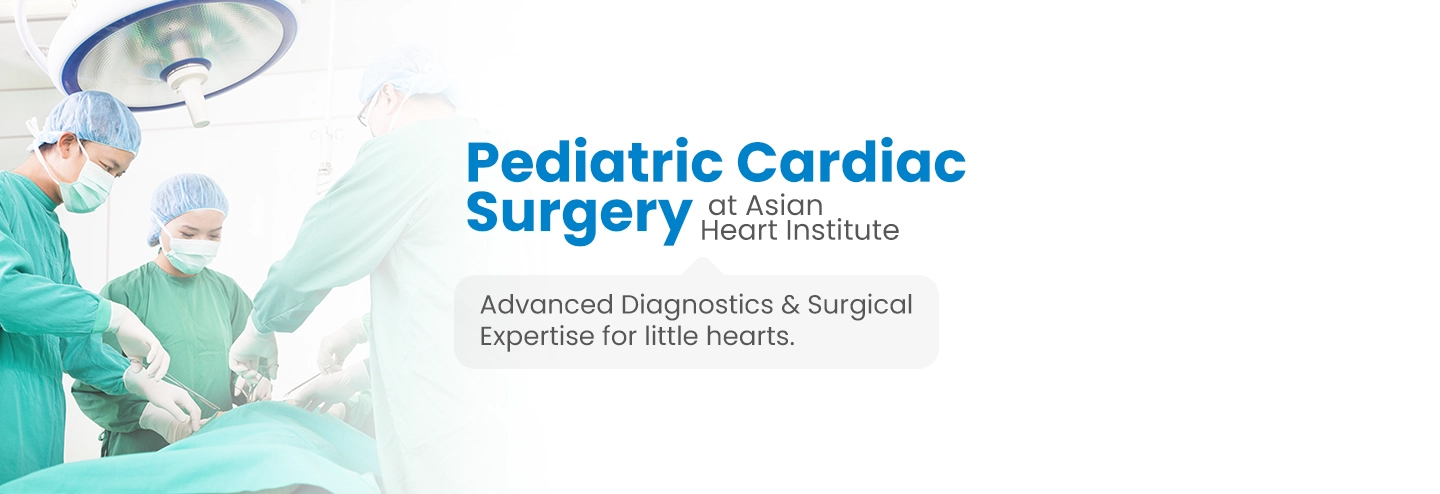
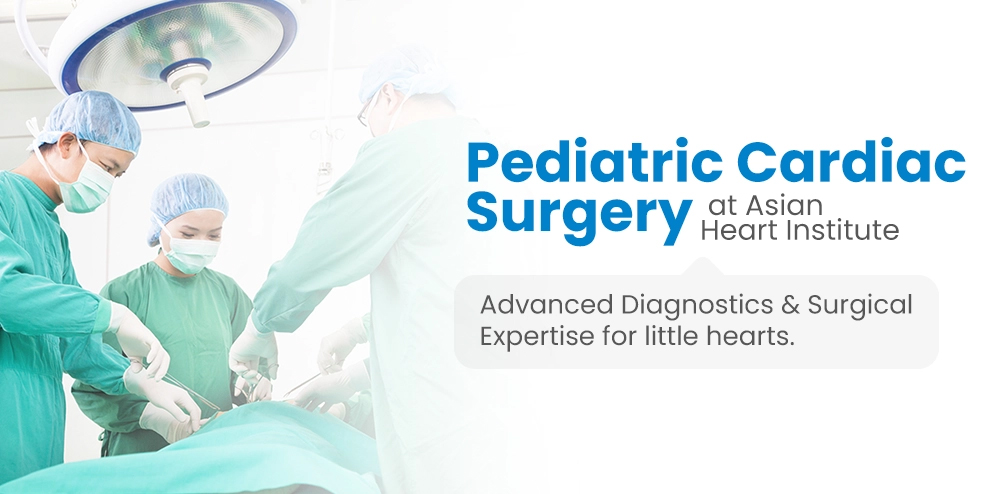
Advanced Congenital and Structural Heart Defect Correction
Asian Heart Institute is one of Mumbai's most reliable pediatric cardiac surgery centers. With specially dedicated pediatric ICUs, global standards of surgeons, and a family-oriented attitude, we deliver successful and soft correction for small hearts.
Pediatric cardiac surgery is the repair or reconstruction of heart defects that occur at birth (congenital) or in early childhood. These operations are frequently lifesaving, establishing normal blood flow and enhancing long-term well-being.
Conditions We Treat With Pediatric Cardiac Surgery
Our surgeons address straightforward to highly complicated cases, employing sophisticated techniques accommodated to children's anatomy and needs.
Congenital and Structural Heart Conditions
- Aortic Aneurysm – A bulging of the aorta wall that, if not treated, can rupture.
- Aortic Dissection – A split in the inside layer of the aorta, a true medical emergency.
- Aortic Valve Regurgitation – Leaking aortic valve, with backward flow of blood into the heart.
- Aortic Valve Stenosis – Narrowing of the aortic valve, reducing blood flow to the body.
- Atrial Septal Defect (ASD) – A hole in the upper chambers of the heart where blood can mix.
- Atrioventricular Canal Defect – Large central heart defect with valve and chamber involvement.
- Cardiomyopathy – Illness of the heart muscle that impairs its pumping ability.
- Chest Wall Deformities – Chest structural problems such as pectus excavatum that can impact heart and lung function.
- Coarctation of the Aorta – A constricted aorta that limits blood supply to the body.
Congenital Heart Defects in Children
General group of structural defects at birth.
- Cyanotic Heart Disease – Condition of heart defects that decrease blood oxygen, turning the skin blue.
- Double-Outlet Right Ventricle – Both large arteries exit from the right ventricle, requiring repair.
- Ebstein Anomaly – A deformed tricuspid valve that allows the blood to pump in the wrong direction.
- Ehlers-Danlos Syndrome (Cardiac Complications) – A condition of the connective tissue which can involve heart vessels.
- Eisenmenger Syndrome – Elevated lung pressure due to undiagnosed congenital cardiac defects.
- Heart Arrhythmia – Irregular heartbeat that can lead to palpitations, dizziness, or fainting.
- Heart Failure – The heart cannot supply enough blood to the body's requirements.
- Heart Murmurs – Abnormal heart sounds due to turbulent blood flow, can be an indicator of a defect.
- Hypoplastic Left Heart Syndrome – The left side of the heart is underdeveloped and needs staged surgery.
- Kawasaki Disease – A condition that is rare and results in inflamed arteries that can harm the heart.
- Mitral Valve Regurgitation – The mitral valve leaks, allowing the blood to flow backward.
- Mitral Valve Stenosis – Narrowing of the mitral valve, blocking blood flow.
- Partial Anomalous Pulmonary Venous Return – A few of the veins in the lungs attach improperly to the heart.
- Patent Ductus Arteriosus (PDA) – An open fetal artery after birth, which overflows the lungs.
- Patent Foramen Ovale (PFO) – A tiny hole in the heart that will close after birth.
- Pectus Excavatum – A sunken breastplate that can press against the heart or lungs.
- Sinus Venosus Defect – An uncommon form of ASD close to where veins come in contact with the heart.
- Subaortic Stenosis – Obstruction immediately below the aortic valve that limits flow.
- Supraventricular Tachycardia (SVT) – Periods of abnormally rapid heart rate.
- Tetralogy of Fallot (TOF) – Four associated defects that result in oxygen-poor blood to be circulated.
- Total Anomalous Pulmonary Venous Return (TAPVR) – Pulmonary veins drain into the improper location of the heart.
- Tracheal Stenosis – Constriction of the windpipe that can occur with heart or chest disease.
- Transposition of the Great Arteries (TGA) – The great vessels are reversed, altering circulation.
- Tricuspid Atresia – An absent or closed tricuspid valve needing staged repair.
- Tricuspid Valve Regurgitation – The tricuspid valve is leaky, disrupting blood flow to the lungs.
- Truncus Arteriosus – One large vessel exits from the heart rather than two.
- Vascular Rings – An abnormal blood vessel encircles the windpipe or esophagus.
- Ventricular Septal Defect (VSD) – A hole in the lower chambers of the heart allowing blood to mix.
Types of Pediatric Heart Surgeries We Do
All major surgeries are performed in our pediatric cardiac surgery program, including:

Congenital Heart Defect Repair – Repair of birth defects such as VSD, ASD, and others.

Atrial Septal Defect (ASD) Closure

Ventricular Septal Defect (VSD) Closure

Patent Ductus Arteriosus (PDA) Ligation

Tetralogy of Fallot (TOF) Total Repair

Tricuspid Atresia Repair (Norwood, Glenn, Fontan Stages)

Ebstein's Anomaly Repair

Total Anomalous Pulmonary Venous Return (TAPVR) Repair

Coarctation of the Aorta Repair

Valve Repairs & Replacements (Mitral, Aortic, Tricuspid)

Arterial Switch Operation (for TGA)

Blalock-Taussig (BT) Shunt (palliative procedure)

Pediatric Pacemaker Implantation

Hybrid & Minimally Invasive Cardiac Procedures (where appropriate)
Why Pediatric Heart Surgery Might Be Necessary
Surgery is recommended when:
- The defect is life-threatening or cyanotic
- Blood circulation is greatly disturbed
- Your child isn't putting on weight or developing as expected
- Symptoms such as breathlessness or tiredness increase
- Previous treatments failed or were temporary
How Surgery Is Performed?
Children's heart surgeries are performed under general anesthetic in specially designed child-specific operation theatres. We employ:
- Heart-lung bypass machines
- High-resolution imaging technology
- Minimally invasive equipment (when relevant)
Your child is then looked after in our Pediatric Cardiac ICU, closely monitored, after surgery.
Post-Surgery Recovery & Care
Most children recover within 7–14 days depending on the procedure. Our team supports:
- 24x7 Pediatric ICU care
- Pain and infection control
- Ventilation and feeding support
- Parental training for home care
- Follow-ups and long-term planning
Asian Heart Institute
Why Choose Us
- Top Pediatric Cardiac Surgeons with global training
- Child-Specific Operating & ICU Facilities
- Advanced Imaging & Monitoring Tech
- Family-Centered, Child-Friendly Environment
- High Success Rates in Complex Cases
- Transparent Communication and Guidance

Quick Query
Need help with your child’s care?
We assist with:

Appointment scheduling
 Book an Appointment
Treatment cost estimate
 Enquire Now

Second opinion services
Book an Appointment

Insurance coordination
Enquire Now
Pre/post-surgery guidance
Enquire Now

Emergency assistance
Enquire Now
Leave your details, and we’ll get in touch immediately.
Frequently Asked Questions
Q1: Are heart surgeries safe for children?
A: Yes. With modern equipment, specialized teams, and pediatric ICUs, success and safety are very high.
Q2: What is the recovery time after surgery?
A: Most kids stay 5–10 days in the hospital and return to light activities within 2–4 weeks.
Q3: Will my child require future operations?
A: Certain heart defects demand staged operations or future valve replacements as the child gets older.
Q4: Are operations reimbursed by insurance?
A: Yes. We guide you through approvals and paperwork so your child receives timely treatment.
Q5: Will my child have a normal life after heart surgery?
A: For most, yes. With appropriate treatment and follow-up, children are able to enjoy healthy, active lives.