Meet Our Distinguished
Team of Cardiologists
Let’s introduce you to our dedicated team of best interventional cardiologists in India who are providing unparalleled heart-care to their patients around-the-clock at Asian Heart Institute.
Best TAVI Hospital in Mumbai
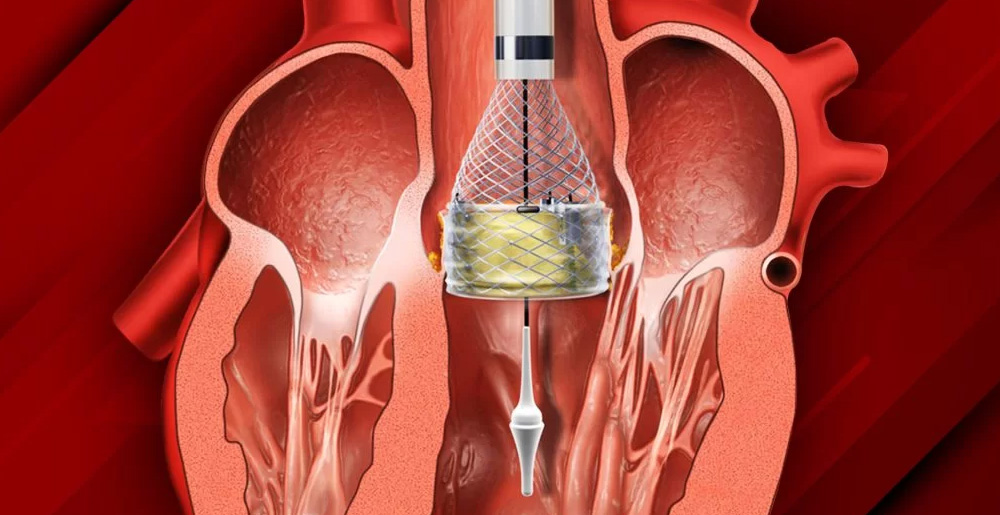
Transcatheter aortic valve replacement (TAVR) or transcatheter aortic valve implantation (TAVI) is a surgical intervention for replacing the aortic valve in the heart without the need of open-heart surgery. Currently, this minimally invasive procedure is the most widely used method for aortic valve replacement for the treatment of aortic valve narrowing. It involves the implantation of an expandable replacement valve that helps in improving the blood flow.
Asian Heart Institute ensures that each patient receives the best possible treatment by performing only indicated cases, avoiding needless procedures. Take advantage of our interventional cardiologist's extensive experience and expertise in providing the best outcomes for patients. Patients have additional safeguards provided by our top-notch surgical standby in the event that complications arise that require surgery.

-
No.1
Since 2002
-
4,25,000+
Patients Treated
-
28,000+
Heart Surgeries
-
99.83%
Success Rate
What is Transcatheter Aortic Valve Implantation (TAVI)?
Transcatheter aortic valve implantation (TAVI) is a minimally invasive surgical intervention to replace the narrowed aortic valve. It does not require opening the chest or stopping the heart, which means less pain, a shorter recovery time, and a lower risk of complications compared to traditional Open-Heart Surgery.
The aortic valve is present between the left lower heart chamber and the aorta, the main artery in the body. Aortic valve stenosis is the narrowing of the aortic valve that results in blocked or slowed down blood flow through the valve issue.
Studies demonstrate that TAVR is typically safer than surgical aortic valve replacement (SAVR) and yields comparable or superior results. Compared to open heart valve surgery, fewer incisions are needed for this procedure. For those who are unable to undergo heart surgery to replace their aortic valve, this might be an option. Breathlessness, chest pain, and other aortic valve stenosis symptoms can be reduced with TAVI.
Why Do You Need Transcatheter Aortic Valve Implantation (TAVI)?
-
01
Severe aortic stenosis, which manifests as breathlessness and chest discomfort
-
02
Asymptomatic patients with severe aortic stenosis and left ventricular hypertrophy
-
03
In patients with severe aortic stenosis undergoing other cardiac surgery
-
04
Inadequately functioning biological tissue aortic valve
-
05
Another illness that makes open-heart valve replacement surgery highly risky, such as kidney or lung disease
-
06
Valve-in-valve procedures for failure of prior bioprosthetic valves
Who is the Right Candidate for Transcatheter Aortic Valve Implantation (TAVI)?
Depending upon your condition your doctor will take the decision whether to proceed for TAVI or not. Patients with following conditions are generally considered for the procedure:
- Severe aortic stenosis
- Aortic stenosis and left ventricular hypertrophy
- Angina
- Heart failure
- High-risk individuals
- Failure of prior bioprosthetic valves
How to Prepare for Transcatheter Aortic Valve Implantation (TAVI)?
Prior to TAVI, you might need to adjust your medication schedule, activities, and diet. You will undergo certain heart tests and blood tests the days and hours before surgery. Your preparation involves:
-

Step 1:
A coronary angiogram and CT aortogram are needed before planning for TAVR (Transcatheter Aortic Valve Replacement).
-

Step 2:
Various measurements are done including the aortic annulus size, the height of coronary artery origins from aortic annulus, and the femoral artery size. These are needed to plan the surgery.
-

Step 3:
The patient needs to be admitted to the hospital on the previous day.
-

Step 4:
Fasting is needed for 5 hours before the procedure.
-

Step 5:
The procedure is performed under mild sedation.
-

Step 6:
Patients may be evaluated for kidney, lung, or brain health, and advice from the respective specialist might be taken. It might be necessary to have a thorough examination to rule out any infections throughout the body.
How is Transcatheter Aortic Valve Implantation (TAVI) Done?
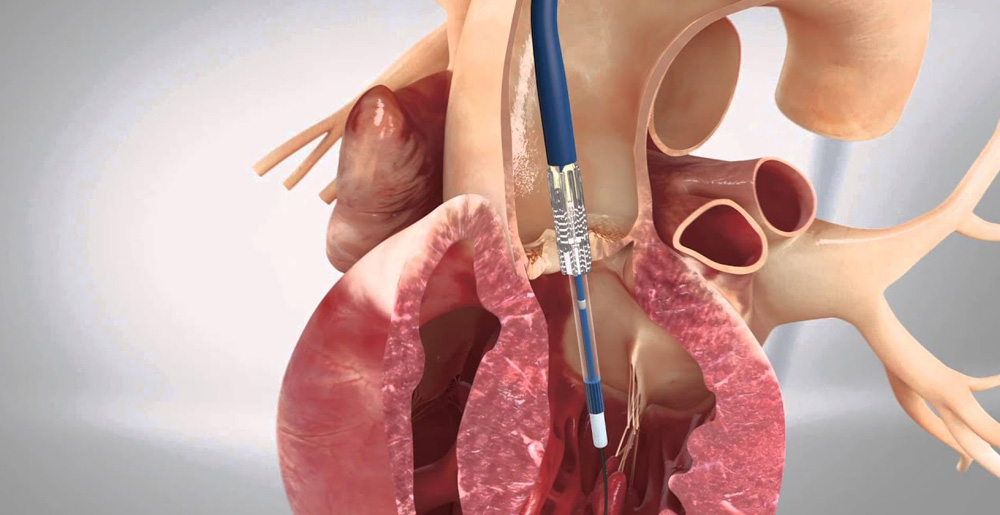
Following steps are involved in the procedure:
-
01
The procedure requires the insertion of a sheath through both groins.
-
02
The catheters are passed via groin sheaths to heart chambers.
-
03
The aortic valve, mounted over a balloon, is passed over a stiff wire placed in the left ventricle and positioned and deployed at the aortic annulus.
-
04
An echocardiogram and contrast aortogram are done to make sure the valve is working properly.
-
05
Wires and sheaths are removed at the end, leaving the stented aortic prosthetic valve in situ.
-
06
You will be moved to the recovery room.
Why Choose Asian Heart Institute?
Our fully equipped facilities for patient care offer services designed for sustained health. We continue to focus on successful, long-term outcomes, which has led to our remarkable success rate. Moreover, we have been the No.1 heart care center since 2002.
With operating rooms outfitted with the finest negative pressure systems, Cath Lab, MRI, and CT Scan, our cutting-edge medical facility provides all services under one roof. Our highly skilled surgical specialists are well- trained to manage the most complex cases in the nation with high expertise and outstanding success rate.
Patient Reviews
“Harshad Sheth”
In 2011, I thought it was the end of my active life. But after my Angioplasty, I started running marathons!
“Devendra Gonawala”
I was having a heart problem since 2021. We were here for a general visit and found I had the same problem as my father and brother, who were also operated in AHI before. So it was no brainer where to get myself operated. Now I really feel that my heat is young again thanks to AHI.
“FanJin & LiQin”
Thank you very much for all your kind help at Asian Heart Institute. It was a really nice trip to Mumbai, and we will never forget it. We are searching for more information here in China for baby’s disease. Maybe we’ll come back again. Thank you again for your enthusiastic help!
FAQ'S
Q1: How should a patient prepare for this Procedure?
A: A coronary angiogram and CT aortogram are needed before planning for TAVR (Transcatheter Aortic Valve Replacement). Various measurements are done including the aortic annulus size, the height of coronary artery origins from aortic annulus, and the femoral artery size. These are needed to plan the surgery. The patient needs to be admitted to the hospital on the previous day. Fasting is needed for 5 hours before the procedure. The procedure is performed under mild sedation.
Q2: What type of activity can the patient expect during the procedure?
A: The procedure requires the insertion of a sheath through both groins. The catheters are passed via groin sheaths to heart chambers. The aortic valve, mounted over a balloon, is passed over a stiff wire placed in the left ventricle and positioned and deployed at the aortic annulus. An echocardiogram and contrast aortogram are done to make sure the valve is working properly. Wires and sheaths are removed at the end, leaving the stented aortic prosthetic valve in situ.
Q3: How can a caregiver/family member help a patient before, during and after the Procedure?
A: Minimal physical support will be required when the patient is bed-bound. A family member can provide the most needed emotional support during these times.
Q4: Advice or guidance for patient after this Procedure?
A: The doctor will discuss the dos and don’ts with the patient and relatives after the procedure. The patient stays in the ICU on the day of the procedure. Depending on the condition, the patient may be shifted to the ward and mobilized the next day. After 1 day in the ward, usually, the patient is discharged. The patient needs to take medicines regularly as advised by the doctor.
Q5: How long does the new valve last?
A: The valve is made of bovine pericardial tissue. Usually, the valve degenerates in 12 to 15 years’ time.
Q6: How often is follow up needed?
A: The first follow-up is usually after a month followed by every 6 months.
Infrastructure & Facilities
 +91 8929781602
  +91 9820027691